Owning a home in Pakistan has transformed from a standard milestone into an elusive financial luxury. Between sky-high building material costs and crushing commercial bank interest rates, low-to-middle-income households have found themselves priced out of the property market entirely.
The Punjab Government’s apni chhat apna ghar program eligibility criteria represents a massive shift in state-backed social welfare. It offers a transparent, zero-interest ($0\%$) financial lifeline designed exclusively to turn raw land into liveable, permanent family homes.
If you already own a small plot of land or live in a joint family system and need structural funding, knowing how the qualification parameters work will make or break your application. Let’s break down exactly what it takes to qualify, clear the documentation hurdles, and get your application approved.
The Core Structural Framework of the ACAG Scheme
Launched under the Chief Minister Punjab initiative, the Apni Chhat Apna Ghar (ACAG) program sidesteps traditional banking models. It operates on a decentralized, micro-credit structural format managed via the Punjab Housing and Town Planning Agency (PHATA).
Rather than burdening applicants with standard market-indexed financing, the project functions as a pure, interest-free (Riba-free) soft loan program.
Key Financial Features of the Loan Package
The program’s financial architecture is explicitly designed not to break a modest household budget:
- Maximum Loan Capital: Up to PKR $1.5\text{ Million}$ (15 Lakhs) disbursed in structured tranches linked directly to construction phases.
- The Interest-Free Rule: Exactly $0\%$ markup. You repay only the principal amount borrowed.
- Monthly Repayment Installment: Fixed at a manageable PKR $14,000$ per month.
- The Repayment Horizon: Spans over a flexible $7\text{-year}$ timeline (84 monthly cycles).
- Initial Grace Period Buffer: Zero installment payments are required for the first 3 months of construction, letting you focus resources entirely on laying down the grey structure.
Table of Contents

Complete Apni Chhat Apna Ghar Program Eligibility Criteria
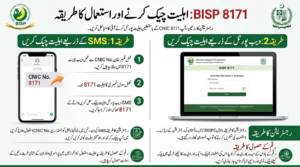
 8171 Check Online CNIC 2026: Direct Verification Portal for the New Rs. 14,500 Payment Status
The provincial government uses a rigorous, data-driven filtration model to ensure these funds reach truly deserving families rather than speculative real estate investors. To land on the successful balloting registry, you must meet four non-negotiable pillars.
1. Geographic and Identity Mandates
First, the program is strictly bounded by provincial borders.
- Provincial Residency: The applicant must be a permanent resident of Punjab, verified directly via their Computerized National Identity Card (CNIC).
- Family Unit Status: According to NADRA data matrices, the applicant must ideally be registered as the designated head of their respective family unit.
2. Precise Plot Dimensions and Location Regulations
You cannot use this loan to buy commercial shops or massive agricultural lands. The scheme is strictly optimized for residential construction on plots you already own.
- Urban Boundary Rules: If your plot sits inside an urban master plan or city municipal limit, the total plot size must be exactly 5 Marla or less.
- Rural Boundary Rules: For rural sectors and village settlements, the plot allocation limit opens up to 10 Marla or less.
- The Joint Family Floor-Addition Clause: A recent update allows joint families living under one roof to apply. You can secure the loan to construct an additional independent floor or separate rooms on top of an existing family structure, provided the ground footprints fit within the Marla limits.
3. The PMT Poverty Score Ceiling
The state verifies your actual socio-economic standing using the Proxy Means Test (PMT) score derived from the National Socio-Economic Registry (NSER) database.
The Hard Cutoff: Your household’s official PMT score must be 60 or less. If your family profile indicates a wealth rank higher than this threshold, the automated portal will instantly flag the application as ineligible.
4. Credit Integrity and Legal Clearance
Because public money is being distributed, your financial past matters.
- Clean Financial Slate: You cannot be an active bank defaulter with any commercial banking institution or micro-finance regulatory network.
- State Legal Clearance: Applicants must have a clean criminal record, free from active indictments or cases pursued by state law enforcement agencies.
Required Documentation Checklist for a Successful Verification Audit
When the Punjab Land Record Authority (PLRA) and housing boards audit your digital portal submission, missing or blurry documents lead to immediate rejection.
Prepare these digital assets before opening the portal:
- Valid Identity Cards: Scanned, high-resolution front and back copies of the applicant’s valid CNIC.
- Verified Proof of Land Ownership: Clear title deeds, registry documentation, or an official Fard issued and stamped by the PLRA.
- Physical Feasibility Affidavit: A legally binding, signed undertaking stating that the applicant does not own any other luxury residential unit and that all provided plot metrics are authentic.
- Utility Billing Ledger: Copies of the latest electricity or gas bills for your current place of residence to verify location details.
Step-by-Step Guide to Applying Online via the ACAG Portal
The entire enrollment pipeline is hosted digitally to cut out middlemen and eliminate bribes.
1.Portal Registration and ID Creation:
Navigate your browser to the official designated portal at acag.punjab.gov.pk . Click on the registration button and create your unique profile using your CNIC and an active mobile number registered in your name.
2.Completing the Personal and Household Matrix:
Log in to your newly generated dashboard and open the application form. Populate the fields with your permanent address, exact monthly household income, and total number of dependents.
3.Inputting Property Dimensions:
Enter the precise geographic location of your plot, including district, tehsil, and specific Mouza or housing colony details, alongside the exact physical dimensions of the land.
4.Uploading Digital Verification Assets:
Upload your scanned CNIC copies, the verified land Fard, your signed legal affidavit, and recent utility bills. Ensure files are clean, readable, and under the maximum size limit specified on the page.
5.Submission and Application ID Generation:
Review the completed form for typos, accept the legal terms, and click submit. The portal will generate a unique application tracking ID, which you can use to check your status during the background vetting and subsequent balloting phases.
Frequently Asked Questions
Can I apply for the Apni Chhat Apna Ghar loan if I do not own a plot of land?
No. The primary phase of this scheme is explicitly built for individuals who already own a piece of land (up to 5 Marla in cities or 10 Marla in rural areas) but lack the liquid cash needed to build a house. It does not provide raw land or plots to landless applicants.
Is the loan completely interest-free, or are there hidden processing fees?
The loan is 100% interest-free ($0\%$ markup). The Punjab Government completely subsidizes the operational costs. You will only pay back the exact principal amount of up to PKR $1.5\text{ Million}$ through fixed monthly installments of PKR $14,000$.
What happens if multiple people from the same joint family apply?
The system utilizes NADRA family tree mapping to group applications. The program targets the family unit as a whole, meaning only one loan allocation can be granted per NADRA family registration ID to keep distribution fair across the province.
How can I check my household PMT score for the ACAG program?
Your PMT (Proxy Means Test) score is calculated using the NSER database. You can check your current status by entering your CNIC on the official BISP portal or checking your verified tracking status directly inside your active dashboard on the ACAG application site.
How long does it take for the loan amount to be released after selection?
Once you clear the district balloting phase and your physical land ownership is verified on-site by PLRA officials, the loan is released in staggered, milestone-based installments. This ensures the funds are used step-by-step for the actual foundation, walls, and roofing phases.
Securing Your Financial Future
The Apni Chhat Apna Ghar program provides low-income families with a rare chance to achieve housing stability without getting trapped in high-interest debt. By aligning your application perfectly with the required plot sizes, maintaining a qualifying PMT score, and uploading verified PLRA land documents, you can confidently navigate the state selection system. Collect your paperwork, register on the portal early, and take the first real step toward building a permanent home for your family.